

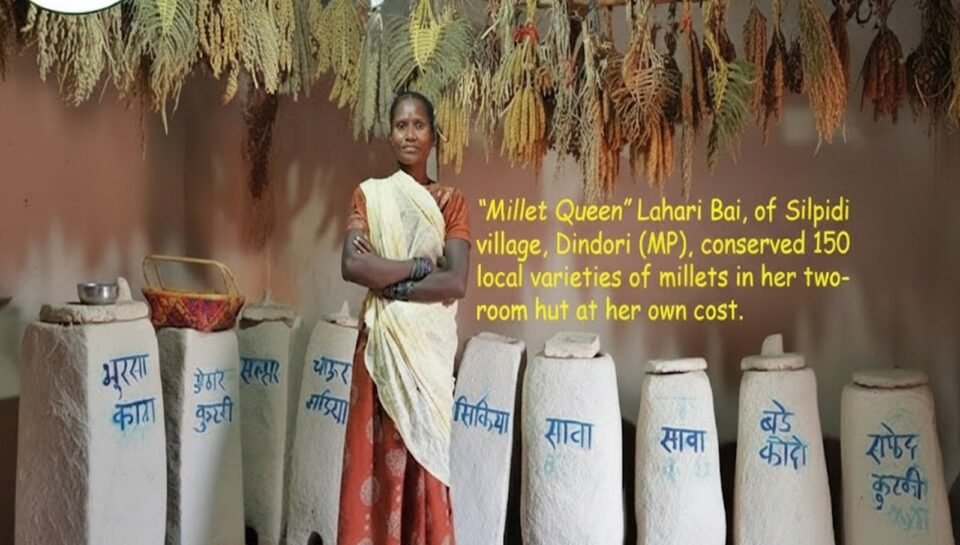
In the remote tribal heartlands of Dindori, Madhya Pradesh, a quiet revolution is growing. Its leader doesn’t live in a mansion or hold a formal degree. She resides in a simple mud hut. Yet, Lahari Bai, a young tribal woman from Silpidi village, has risen to become a national icon, celebrated as India’s “Millet Queen” and a brand ambassador for India’s Year of Millets.
Her story is one of profound connection to the land, unwavering dedication, and a mission to save a heritage that can save our future.
A Lifelong Bond with the Soil
Lahari Bai’s journey began in childhood, working alongside her family in their fields. Unlike many of her peers who migrated for work, she chose to stay rooted—literally and figuratively. From the age of 16, she dedicated herself to agriculture, but with a specific focus: indigenous seeds and millets.Her home is not just a hut; it is a living bank. She has single-handedly collected, preserved, and cultivated over 150 varieties of native seeds, including numerous types of millets like kodo, kutki, sanwa & ramban. For her, these are not just crops; they are ancestral treasures, a legacy from her forefathers that holds the key to nutrition and sustainability.
The Mission: Saving Heritage, Ensuring Survival
Why this obsession with millets and native seeds? Lahari Bai saw a dangerous trend: the decline of traditional, climate-resilient crops in favour of commercial ones. She recognised that millets—nutrient-dense, drought-resistant, and water-efficient—were perfectly suited to the region’s ecology and crucial for tribal food security.
“These seeds are like children to me,” she says. Her mission became to propagate them. She grows these millets on her own land, saves the seeds, and **freely distributes them to other farmers**, urging them to return double the quantity after harvest to keep the chain alive. This grassroots seed-sharing network is empowering her community, preserving biodiversity, and promoting organic farming.
From a Hut to National Ambassador
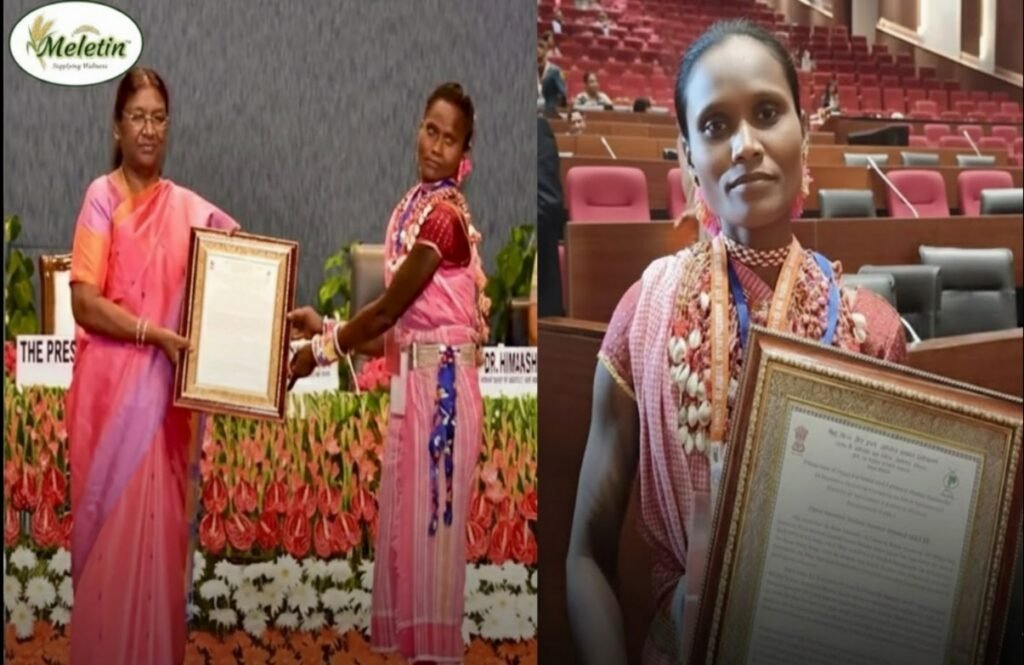
Lahari Bai’s extraordinary work, done away from the limelight, could not stay hidden for long. Her expertise and impact brought her national recognition. She was appointed as a Brand Ambassador for Millets by the Madhya Pradesh government, a role that sees her guiding and inspiring farmers across the state.
Her story gained further prominence as India championed millets globally. As a celebrated face of the tribal conservation tradition, she represents the very soul of India’s millet revival movement—a movement that links soil health, human health, and tribal wisdom.
A Symbol of Tribal Wisdom on World Tribal Day
On occasions like World Tribal Day, Lahari Bai’s story takes on even greater significance. She embodies the deep ecological knowledge and sustainable practices of tribal communities. In a world grappling with climate change and food insecurity, her life’s work offers a blueprint: that the solutions for the future can be found in the wisdom of the past.
She proves that true change doesn’t always come from high-tech labs; it can grow from a small field in Silpidi, tended by calloused hands and an indomitable spirit.
The Legacy of the Millet Queen
Today, Lahari Bai continues her life simply—sowing, harvesting, and preserving. But her influence is vast. She is a beacon for sustainable agriculture, a guardian of biodiversity, and an inspiration to millions, especially young girls in rural India.
Her message is clear: ‘’Your heritage is your power. By preserving the old seeds, we are sowing the future.’’ In every grain of millet she saves, Lahari Bai is protecting a piece of our planet’s health and her community’s destiny, truly earning her title as India’s Millet Queen.
Let her story remind us that sometimes, the most profound heroes are those who quietly nurture the roots, ensuring the tree of life thrives for generations to come.
